

Press Brakes for Sale: Find the Right Fit for Your Shop
Press Brakes for Sale: Find the Right Machine for Your Shop's Workload
Selecting the right press brake is an important decision. Press brake selection should start with your shop's workload—including material type and thickness, typical bend lengths, required tonnage, number of daily setups, and tolerance requirements—rather than brand preference or price alone.
Capital Machine can help with this selection. We work with shops as a consultative partner, assisting manufacturers in evaluating press brakes for purchase. Whether your shop is adding capacity, replacing aging equipment, or expanding into new capabilities, we have press brake options for you.
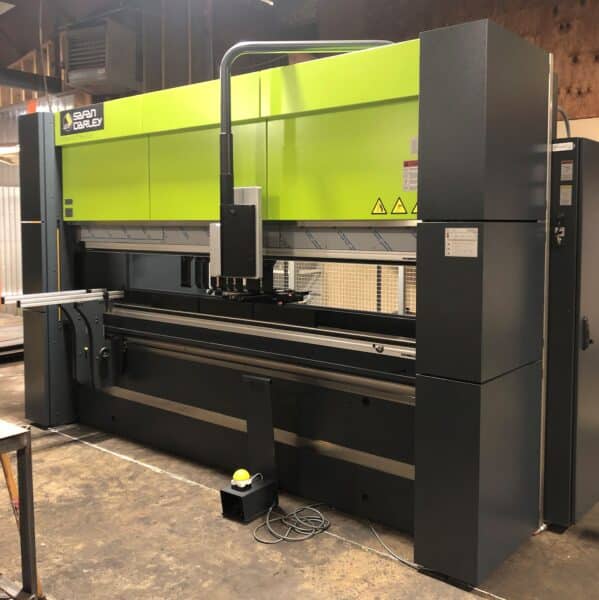
We carry hydraulic, electric, and hybrid press brake configurations, along with multiple press brake lines, such as Accurpress and SafanDarley. We also offer computer numerical control (CNC) press brakes for shops with automated needs. Our recommendations are matched to the buyer's production reality and not limited to a single manufacturer's catalog.
Capital Machine also provides full lifecycle support with condition-based maintenance, break-fix service with parts-stocked trucks, and system upgrades. We have more than 40 years of experience providing support through our 43 factory-trained field service engineers across our 22-state territory. We also have five technology centers where buyers can see and test out press brakes running under power before making a commitment.
Hydraulic, Electric, or Hybrid: Which Press Brake Makes Sense for Your Application?
Hydraulic press brakes deliver the tonnage and force needed for heavy-gauge plate work and deep forming. This makes them the standard choice for structural steel, oil and gas, and thick-material applications. CNC hydraulic press brakes offer more versatility, automation, safety, and precision than traditional mechanical press brakes.
Electric/servo-electric press brakes are 30% to 50% faster than hydraulic press brakes and offer energy savings of up to 70%. This makes them ideal for shops running lighter-gauge repetitive work where speed and operating cost matter more than raw tonnage.
Hybrid press brake machines are the middle path, combining hydraulic force with servo-electric precision and energy savings. These press brakes are well-suited for shops that handle a mix of heavy and light work and want one machine to cover both.
Press Brake Tonnage and Specifications: How to Size Your Next Machine
Shops must account for tonnage when sizing a press brake machine. Material type, thickness, bend length, and die width determine the required press force. Oversizing your shop's needs can reduce hourly throughput by 30% to 40% when working with thin sheets. This stems from large presses having significant ram inertia, which limits approach and return speeds.
Standard press brakes range from 4 feet to 20+ feet, with larger machines available for structural and heavy-plate applications. The right length depends on your shop's maximum part size and whether you need to run multiple smaller parts simultaneously. Additional factors, such as stroke length, daylight opening, throat depth, ram travel speed, back gauge axes, and repeatability tolerances must be considered as well.
Which Industries Buy Press Brakes and How Your Application Drives the Right Choice
Different industries require different press brakes due to their applications. Job shops require versatility and fast changeovers for high-mix, low-volume work. HVAC fabricators require consistent ductwork and enclosure forming. Automotive suppliers need precision brackets and chassis components at volume. Construction and structural steel require heavy tonnage for angles and beams.
Job shops running 10+ setups per day need a different press brake than a production manufacturer running the same part all shift. Mid-market manufacturers with 100 to 500 employees increasingly invest in automated press brake cells with robotic part handling, which Capital Machine can specify and support.
Financing Your Press Brake Purchase: Options That Fit Your Capital Plan
Press brakes represent significant capital investments. Mid-range hydraulic press brake models of 100 to 200 tons generally cost between $150,000 and $250,000. High-end configurations can range from $250,000 to more than $750,000. Financing options exist to align equipment acquisition with cash flow requirements.
Under Section 179 of the U.S. IRS tax code, businesses can immediately deduct the full purchase price of qualifying equipment up to $2.5 million in the year of purchase instead of depreciating the machinery over time. This allows for significant year-end capital planning.
Why Lifecycle Support Matters More Than the Purchase Price
Purchase price is just the starting point. Shop managers need to include installation supervision, operator training, maintenance programs, spare parts, and break-fix response to determine whether the press brake delivers its projected ROI. This is where Capital Machine can provide additional savings through full lifecycle support.
Get a Consultation on the Right Press Brake for Your Shop
Every engagement with Capital Machine begins with understanding your specific production challenges, capacity needs, and budget constraints. We invite shop managers to visit one of our six technology centers to test press brakes under power. Contact us today for a tailored quote.