

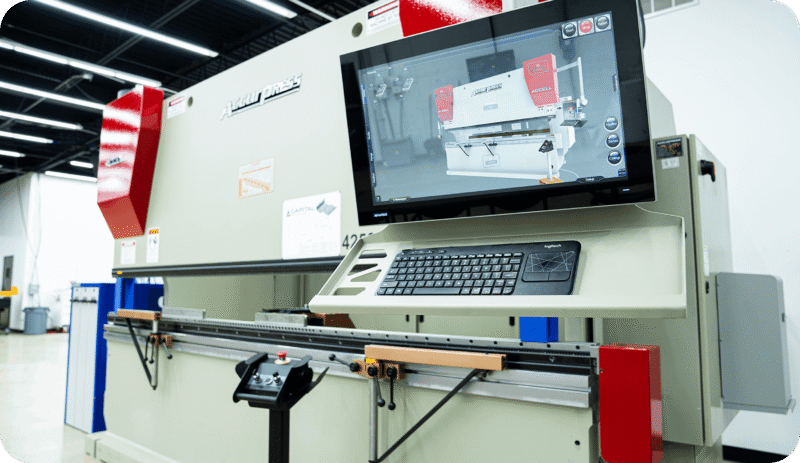
What parts are you making? What tolerances and volumes are you working with? Where is production getting held up today?
We will help identify the equipment that fits the application. A tax benefit does not make the wrong machine a good investment.
Once we know what you need, we review machine availability, current lead times, freight, rigging, electrical requirements, installation, and commissioning. Then we provide you with the equipment information, quote, delivery plan, and projected in-service date.
You can take that packet to your CPA or Controller, who can determine how the purchase applies to your specific tax situation and how much of the cost you can deduct this year.
So the question is no longer whether the deduction will still be there next time you buy. The question is what a full write-off is worth on the machine your shop actually needs.
Section 179 and bonus depreciation work differently. Section 179 has a dollar limit and a business taxable-income limitation, while bonus depreciation does not have the same dollar cap.
Your CPA or Controller can help determine which treatment applies to your business.
Federal and state tax treatment can differ. Texas, for example, conforms to federal bonus depreciation for franchise tax purposes, while Florida and Georgia require an addback.
Your CPA or tax advisor can confirm how the rules apply to your business.
Equipment already in stock can have a shorter path to installation than equipment that still needs to be built.
We can show you what is available and help you understand the path to getting it into production.
Then, if the numbers make sense, talk with us about the equipment and timeline behind them.
100% of the equipment cost, deductible in the tax year the machine is placed in service. Under a standard 7-year schedule, you would deduct about $60,733 in year one instead.
Deduction × the 35% rate you selected.
Estimated first-year federal deduction
$425,000
100% of the equipment cost, deductible in the tax year the machine is placed in service.
First-year federal tax reduction
$148,750
Deduction × the rate you selected.
Effective first-year cost
$276,250
Equipment cost less the estimated first-year federal reduction.
Value of accelerating
$0
Present value of taking the deduction now rather than over time.
Deduction claimed each year, on the numbers you entered.
Equipment has to be placed in service — installed, commissioned and ready to run — before your tax year ends. Between build slot, freight, rigging, electrical and commissioning, the date you actually have to decide by is earlier than December 31. We can tell you what that date is for the machine you are considering.
You do not need to have the machine, budget, or tax strategy completely figured out before you talk with us.
Tell us what you are considering, what your shop needs, and when you would ideally like the equipment running. We will review the available options and present a realistic plan to you.
Twenty minutes. No obligation. No pressure.
And if a purchase does not make sense right now, we will let you know.
Capital Machine is an equipment supplier, not a tax advisor. This information is general, is current as of September 2026, and is not tax advice. Your actual result depends on your entity type, taxable income, state, and how the purchase is structured. Please confirm the details with your CPA or tax advisor.