Press Brake Maintenance | Condition-Based Programs
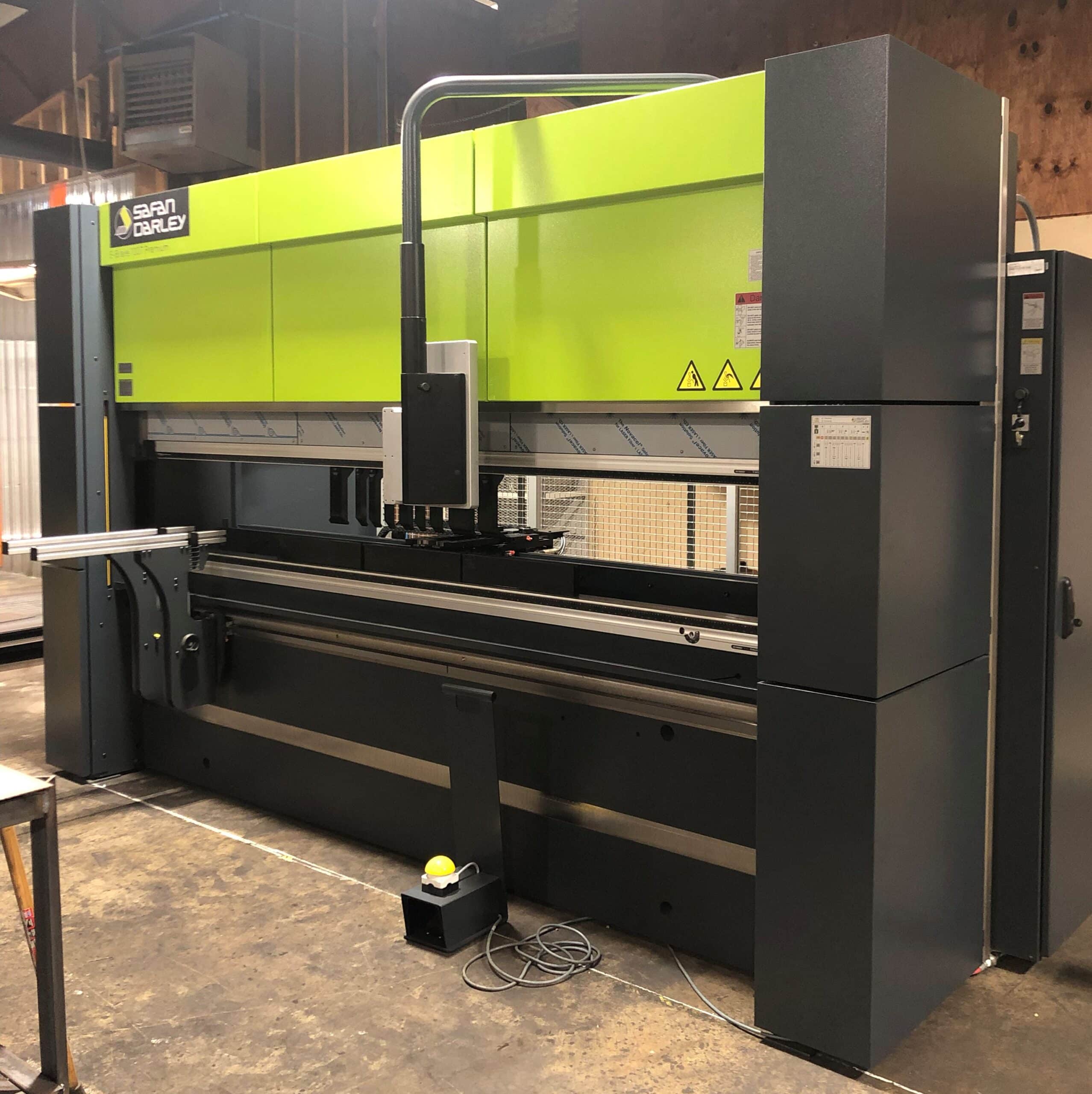
Press Brake Maintenance That Predicts Problems Instead of Waiting for Breakdowns
Unplanned press brake downtime disrupts production schedules, creates missed delivery deadlines, and costs significantly more than planned maintenance. Companies relying solely on reactive maintenance experience repair costs up to five times higher than those using a preventive approach.
Capital Machine Technologies uses a condition-based preventive maintenance program. We perform oil sampling twice per year to detect wear patterns and fluid degradation before it escalates into unplanned failures. This data-driven approach replaces the traditional calendar-based oil change model with targeted interventions.
Rather than replacing oil on a fixed schedule our maintenance program monitors actual machine health indicators, such as particulate levels, contamination, and viscosity degradation. This catches real problems earlier, while eliminating unnecessary service.
Our service programs are available as 1-year or 2-year contracts with no auto-renewal, giving fabricators flexibility to evaluate results before recommitting. Our programs are structure designed to earn continued business on performance rather than contractual lock-in.
Capital Machine offers six core service categories: break-fix repairs, condition-based maintenance and preventative maintenance, installation supervision, operator training and retraining, application support and retrofits. For more information visit our full-service page.
What Your Press Brake’s Hydraulic Oil Reveals About Its Health
Our in-depth oil analysis uses the ISO 4406:99 standard for fluid cleanliness in hydraulic and lubrication systems. We measure the particulate count in oil level contamination, oxidation and viscosity breakdown.
Our oil analysis looks for copper, iron, and chromium, which indicates specific component wear.
The key components of ISO 4406:99 have three numbers, such as 11/12/15. The first number represents smaller particles that can cause erosion and surface fatigue. The second number cover particles that can cause damage in high pressure systems. The third number measures larger particles that are the most destructive.
This guide from the ISO 4406:99 informs our decisions and helps prevent developing problems from becoming failures. Our technicians draw oil samples during scheduled visits and then send the samples to a certified laboratory. The results are interpreted in context of each machine’s baseline, operating hours, and application demands. This isn’t a generic test, but a machine-specific trend analysis.
Most shops either never check their oil, or change it on a fixed schedule, such as every 2,000 hours, regardless of actual condition. This means they either miss contamination problems entirely or waste money replacing good oil. Capital’s approach optimizes both
Our 41 factory-trained field service engineers know every machine we service intimately from press brakes to shearing machines. If our analysis reveals a problem, they can diagnose the root cause, such as seal wear, an external contamination source, or a system design issue, immediately, not just flag a number on a report.
Hydraulic System Maintenance: The Most Critical Component to Monitor
The hydraulic system is the most failure-prone part of a press brake due to the multiple moving parts and
high-pressure, high-stress environment, which leads to contamination, thermal degradation, and leakage. Bend accuracy is directly affected by the hydraulic system as it powers the ram, controls speed, and pressure. Almost all hydraulic system failures trace back to fluid contamination rather than mechanical component failure.
Capital’s condition-based preventive maintenance program monitors the hydraulic oil contamination levels to prevent a hydraulic press system failure. We also provide filter replacement at manufacturer-specified intervals; hose and fitting inspection for cracking, abrasion, and weeping; seal condition assessment; pump noise/vibration monitoring; and reservoir cleanliness, all to ensure your press brakes will perform at optimal levels.
By monitoring the hydraulic press brake system and its accessory parts we can stop a contamination chain reaction. This can occur when particles enter the hydraulic system through worn seals, poor filling practices, or external sources. The particles then score valve surfaces and pump components. This scoring creates more particles, which leads to accelerating wear and eventual component failure. Early detection through oil analysis breaks this cycle before damage occurs.
Capital’s 41 factory-trained field service engineers know every press brake platform’s specific hydraulic architecture from Accurpress hydraulic and servo-hydraulic systems to SafanDarley electric systems and how to service them accordingly. Generic maintenance guides miss these platform-specific requirements.
Electrical, Controls, and Safety System Maintenance That Prevents Costly Surprises
Press brake maintenance requires regular inspection of electrical wiring, cleaning of electrical cabinets, testing of safety circuits and controls, in addition to regular hydraulic fluid system and accessory component parts inspection. Physical connection tightness verification on press brakes is critical as thermal cycling from current flow causes copper expansion and contraction that gradually loosens screw terminals. This loosening produces intermittent faults that are nearly impossible to detect during periodic visual inspections. A proper inspection also includes contactor and relay examination, motor insulation testing, and cable/harness integrity checks.
Computer numerical control (CNC) press brake machines require a proactive approach to maintenance.
CNC press brakes require software updates. This can include firmware updates when available from the OEM. Additional maintenance for a CNC bending machine includes parameter backup procedures, battery replacement for memory-backed systems, and encoder calibration verification.
Mandatory OSHA compliance safety system maintenance includes light curtain testing and alignment, E-stop function verification, safety relay testing, and guarding condition inspection. Our factory-trained technicians will certify these systems as part of regular maintenance visits helping to prolong the life of your machines.
Mechanical and Tooling Maintenance That Keeps Your Bends Accurate
To keep a press brake accurately bending there are multiple components and points to verify and check. Ram gib adjustments are essential to the correct and accurate operation of a press brake. Proper gib adjustment will minimize play and ensure accurate ram travel.
Back gauge ball screw and bearing maintenance will help prevent dry friction, which causes backlash that degrades positioning accuracy from +/-0.02mm to +/-0.1mm. Inspection of the crowning system is an important part of press brake maintenance. Examination must cover the whole machine length, as top tooling must penetrate bottom tooling at the same depth across the entire bed. Inspection should also include bed/ram parallelism verification.
Tooling maintenance in a press brake requires examination for wear, chipping, and deformation on punch tips and die shoulders. Tooling alignment verification and clamping system inspection will find worn tooling, which is one of the most common causes of bending inconsistency. Proper cleaning and storage procedures will also help extend the life of a machine.
Identifying warning signs, while operating a press brake, can help prevent injury and avoid major breakdowns.
Some mechanical issues that need professional attention are increasing angle variation across the bend length. This is a crowning issue. Inconsistent back gauge positioning can be due to ball screw wear. Unusual noises during operation can be the result of bearing wear and gib clearance. You should also further investigate visible play or deflection in the ram.
Capital’s condition-based maintenance program will help operators avoid major equipment breakdowns, while keeping operations running smoothly. By having regular mechanical inspections by our factory-trained technicians we can identify developing wear patterns before they affect part quality and recommend corrections and solutions before the situation becomes a major repair issue.
Start Your Press Brake Maintenance Program: Flexible Contracts, No Auto-Renewal
While many companies have all the best intentions for implementing preventative maintenance programs, few actually take the necessary time or steps to implement such programs. To help encourage proper machine maintenance Capital offers customized Preventive Maintenance Programs for those manufacturers that do not wish to implement such programs themselves.
Capital makes maintenance easy. Our maintenance programs are available as 1-year or 2-year contracts with no auto-renewal, giving organizations flexibility to evaluate the results before recommitting. Our programs are structure designed to earn continued business on performance rather than contractual lock-in.
Our maintenance programs include scheduled condition-based maintenance visits by our factory-trained field service engineers. This includes oil sampling and laboratory analysis of oil twice a year with written reports. We offer mechanical and electrical system inspection, safety system verification, and actionable recommendations. Everything is documented so shop management can track machine health trends over time. Regular maintenance is the key to ensuring the longevity, accuracy, and efficiency of your machines.
Capital Machine’s 41-factory-trained field service engineers across 22 states are ready to fix and diagnose your industrial machine issues. Our engineers have parts-stocked service vans to fix and repair your machines today. We maintain the largest dedicated service staff of any metal fabrication equipment distributor in the South. Our engineers are backed by a 30-member service department. Our depth means your repair gets done today and doesn’t depend on a single technician’s availability or schedule. Contact us today to learn more.