Brent Anderson is Vice President of Sales at Capital Machine and a trusted advisor to manufacturers adopting robotic welding and automation. With decades of experience helping customers identify high-impact applications and validate ROI before investing, Brent helps fabrication leaders automate with confidence.

Continue reading “When to Choose a Small Press Brake for Your Shop”

Staff-Doug-Peoples-square-f102801acfb3c0804c97278e47599dbb-

Doug Peoples has more than 20 years of territory experience and works closely with customers to identify the right fabrication solutions. Doug focuses on long-term customer relationships, guiding manufacturers through phased capability expansion and strategic capital planning to support sustained growth.

Where It Started

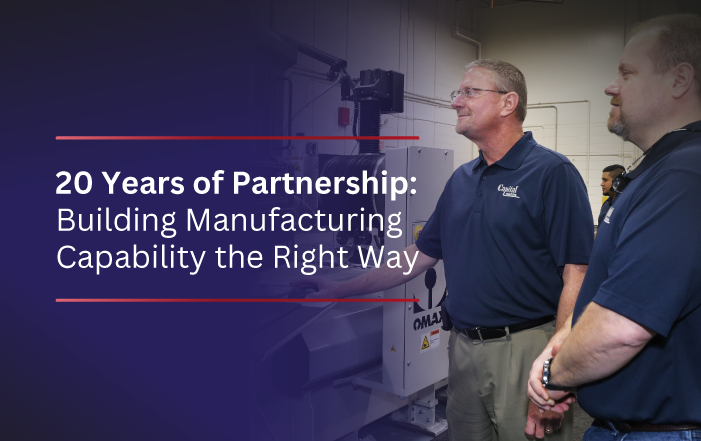
Nearly 20 years ago, this customer purchased their first CNC press brake from Capital Machine — an Accurpress 7 Series 250 with an ETS 3000 control.

At the time, it was simply the right machine for what they needed. But that first purchase became the beginning of a relationship that would continue as their operation grew and changed.

Growing With Their Needs

Over the years, their needs became more complex. They added larger Accurpress Excels with advanced 6-axis backgauges, plasma cutting systems, multiple flat lasers, OMAX waterjet technology, robotic welding and CNC sawing systems.

Each new piece of equipment came at a different point in the company’s growth. Sometimes they needed more capacity. Other times, they were looking to bring a new process in-house or improve the way a part was being made.

As those needs changed, so did the conversations.

Rather than looking at each machine as a separate purchase, the focus became understanding where the customer was headed and what equipment made sense for that next step.

The Next Step

Most recently, that next step was large-format tube laser cutting.

The new system gives the customer the ability to take parts from 3D models directly into production while bringing more of the manufacturing process under their own roof. It reduces their dependence on outside suppliers and gives them more control over how and when parts are produced.

What stands out about this latest project is that the customer came to Capital Machine with the need already in mind.

After nearly two decades of working together, they knew who to call.

A Relationship Built Over Time

That kind of relationship doesn’t come from one machine sale. It develops over years of conversations, service, changing production needs and finding the right solution when the next challenge comes along.

Looking back, the customer’s operation today looks very different from where it started nearly 20 years ago. The equipment has changed, their capabilities have expanded and new technologies have been added along the way.

But the relationship has continued through each stage.

Looking Ahead

For manufacturers, growth rarely follows a perfectly planned path. One investment leads to another as new customers, new parts and new opportunities come along.

Having a partner who understands where you’ve been can make those next decisions a little easier.

For this customer, what started with one press brake nearly 20 years ago has grown into a much broader manufacturing operation — and a partnership that has grown right along with it.

A Partnership Framework for Growth

Before making your next capital equipment decision, consider:

  1. Does this investment expand capability or just capacity?
  2. How does it integrate with existing systems?
  3. Will it reduce external dependencies?
  4. Does it align with long-term manufacturing strategy?
  5. Are you working with a partner who understands your evolution?

These questions can help make sure the next investment supports where your operation is going, not just what it needs today.

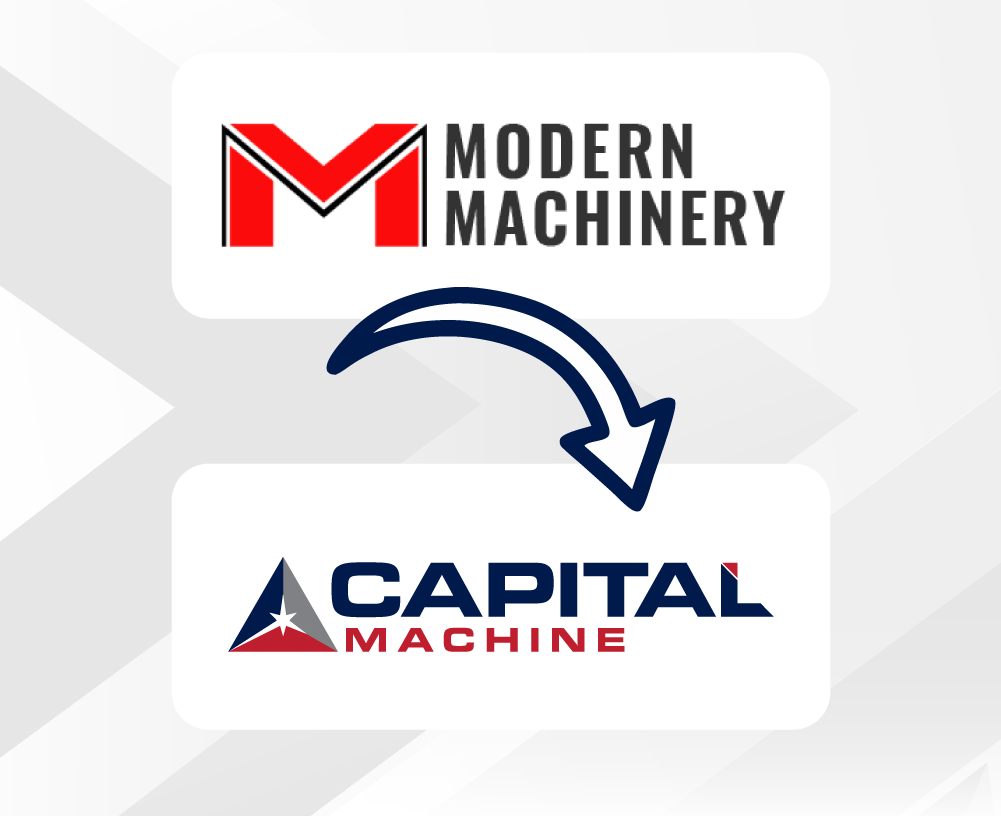
Modern Machinery Is Now Capital Machine

This integration unites both brands under a single name, with a new logo representing the combined organization

TAMPA, Fla., Aug.11, 2026 — Modern Machinery is now doing business as Capital Machine, completing an integration that brings both companies’ products, services and support resources together under one name and brand identity. The change took effect Aug. 11.

Modern Machinery’s equipment and expertise are now offered alongside Capital Machine’s portfolio of metal fabrication, automation and robotic welding solutions, giving customers a single source for a broader range of machinery, parts, training and service.

Customers will work with the same teams and the same contacts.

The transition includes a new Capital Machine logo designed to represent the combined organization. It pairs the blue long associated with Capital Machine with the red associated with Modern Machinery. Its three-part triangle stands for the company’s three primary disciplines — bend, cut, weld — as well as the three businesses that formed today’s organization: Capital Machine, Modern Machinery and Capital Robotics.

The new identity is now in place across the company’s website, digital channels, email communications and customer-facing materials.

How Application Support Helps Shops Improve Productivity Without Buying New Equipment

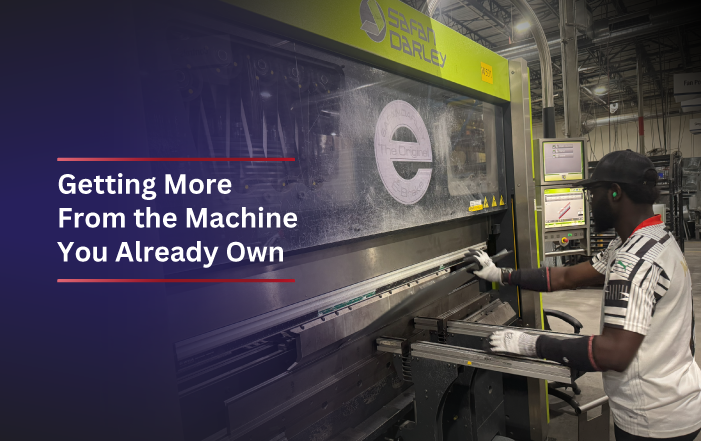
Investing in new equipment is one of the most effective ways to increase production capacity, but it’s not the only way. In fact, many manufacturers already have untapped potential sitting on their shop floor.

Over time, production demands evolve. New materials are introduced, customers require tighter tolerances, and product mixes become more complex. Yet many shops continue to run the same programs, use the same tooling, and follow the same processes they established years ago. As a result, they may only be using a fraction of what their equipment is capable of delivering.

That’s where CNC application support plays a valuable role. Rather than focusing on repairs, application support helps manufacturers refine the way their machines are used, uncovering opportunities to improve efficiency, quality, and throughput through smarter processes. It’s an important part of manufacturing process optimization, helping shops maximize the return on the equipment they already own.

Your Machine May Be More Capable Than You Think

Modern fabrication equipment is designed with a wide range of capabilities, but many manufacturers never fully explore them. Once a machine is producing acceptable parts, there’s often little incentive to revisit established processes.

This happens for several reasons. Operators may not have received advanced training after installation. Employee turnover can lead to the loss of valuable programming knowledge. Production schedules leave little time to experiment with new features or optimize existing programs. In many cases, manufacturers simply aren’t aware of capabilities that could improve performance.

The result isn’t a machine that’s underperforming because of a mechanical issue, it’s a machine that’s operating below its full potential because processes haven’t evolved alongside production needs.

Unlocking those capabilities doesn’t necessarily require new equipment. Sometimes it simply requires a fresh perspective and the right technical expertise.

Where Productivity Is Commonly Lost

Small inefficiencies often go unnoticed because they’ve become part of the daily routine. Individually, they may seem insignificant. Collectively, they can have a measurable impact on productivity and profitability.

Some of the most common opportunities for metal fabrication process improvement include:

Programming inefficiencies

Programs that were created years ago may still work, but they may not represent the fastest or most efficient approach. Small programming adjustments can reduce cycle times without compromising quality.

Excessive setup time

Lengthy changeovers reduce available production time. Reviewing setup procedures, sequencing, and operator workflows can often streamline the transition between jobs.

Tool selection

Using the correct tooling for a specific application improves accuracy, reduces wear, and helps maintain consistent part quality while shortening setup time.

Material parameters

As manufacturers begin processing different grades or thicknesses of material, cut speeds, feed rates, and bend parameters often need adjustment to maintain optimal performance.

Workflow inconsistencies

Even when machines are operating efficiently, unnecessary movement, inconsistent processes, or communication gaps between departments can create production bottlenecks that limit output.

Identifying these opportunities is a key part of manufacturing application engineering, where improving the overall production process becomes just as important as maintaining the equipment itself. Explore our services to learn more about how we can support you. 

What Is Application Support

Application support is often misunderstood as technical support after something goes wrong. In reality, it is a collaborative process focused on helping manufacturers solve production challenges and optimize machine performance.

At Capital Machine, application specialists work alongside customers to understand their specific production goals and identify practical improvements that deliver measurable results.

Depending on the application, that support may include:

  • Optimizing laser cut parameters for new materials or thicknesses
  • Improving press brake bend consistency through programming and tooling adjustments
  • Configuring robotic welding cells for new part geometries
  • Reducing cycle times by refining machine programs and production workflows

Rather than offering generic recommendations, these improvements are tailored to each customer’s products, materials, and manufacturing environment.

The goal isn’t simply to keep machines running—it’s to help shops improve manufacturing productivity through smarter processes and better utilization of existing equipment.

Small Process Changes That Deliver Big Results

Manufacturers often associate productivity improvements with major investments. However, meaningful gains frequently come from a series of smaller refinements that build on one another.

For example, adjusting programming parameters may reduce cycle times by only a few seconds per part. Improving setup procedures may eliminate several minutes during every job change. Optimizing tooling selection can reduce scrap while improving consistency.

Individually, these changes may seem modest. Across hundreds or thousands of production cycles, they can significantly increase throughput while improving quality and repeatability.

These incremental improvements also build operator confidence. When machines produce consistent results, operators spend less time troubleshooting and more time focusing on production.

The result is greater efficiency without adding equipment, expanding floor space, or disrupting operations.

Continuous Improvement Doesn’t End After Installation

A successful machine installation is only the beginning of the relationship.

As customer requirements evolve, manufacturers often begin working with new materials, different part geometries, tighter tolerances, or increased production volumes. Processes that once performed well may no longer represent the most efficient approach.

That’s why application support should be viewed as an ongoing partnership rather than a one-time service.

By periodically reviewing production processes, programming strategies, tooling, and machine performance, manufacturers can continue adapting to changing business needs while maximizing the value of their existing equipment.

Continuous improvement isn’t about constantly changing the way you work. It’s about making thoughtful adjustments that keep your operation competitive as technology and production demands evolve.

Get All the Value From Every Machine

The most valuable investment is making sure you get the most from every machine you purchase. Through CNC application support, manufacturing process optimization, and ongoing technical collaboration, manufacturers can increase machine efficiency, improve product quality, and strengthen long-term productivity without making another capital investment.

At Capital Machine, our specialists work alongside manufacturers to identify opportunities for improvement that align with their production goals today and prepare them for tomorrow’s challenges.

Contact our Service Team to learn how application support can help you unlock the full potential of your existing equipment.


By Joshua Swainston
Program Manager, OMAX Corporation
Edited by Capital Machine

Talk to the operators who run waterjets and one theme comes up again and again: the software makes or breaks the machine. At Capital Machine, that feedback shapes what we sell, and it is a big reason we distribute OMAX waterjets and the IntelliMAX software that drives them.

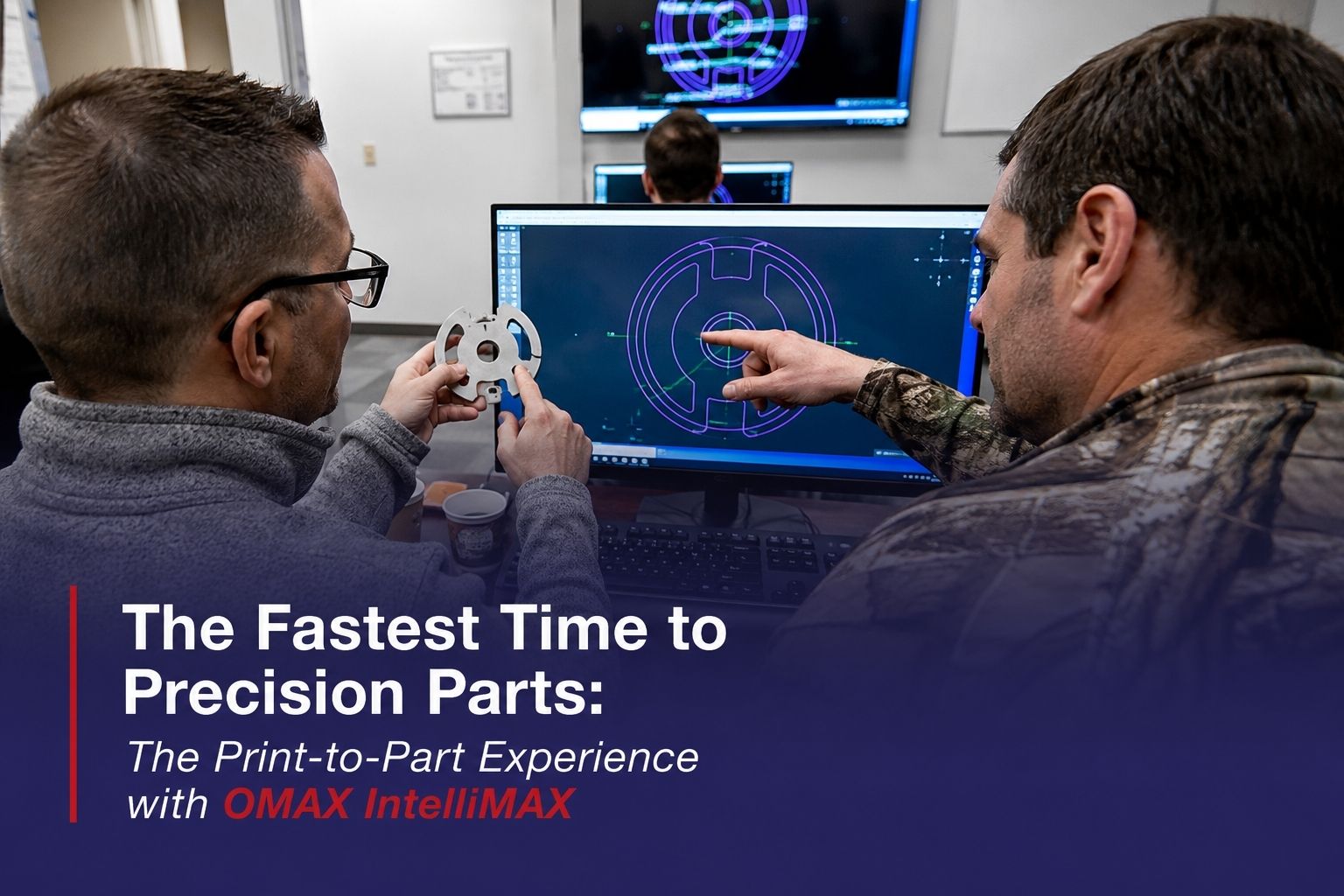
OMAX IntelliMAX software is built around a simple idea: make abrasive waterjet cutting easier to program, easier to run, and easier to trust from the moment a part file enters the workflow. For shops trying to move quickly from print to part, that matters because the software does more than control the machine. It helps guide the process, automate setup, and give operators a clear path from design file to finished part.

That is where IntelliMAX starts to separate itself from other waterjet CAD/CAM software: it is not generic software adapted for waterjet cutting, it is software built around the OMAX cutting process. Built specifically for OMAX waterjet systems, IntelliMAX brings together waterjet-specific cutting intelligence, automated toolpathing, material-based cutting models, and operator-friendly controls in one connected software environment. Instead of asking operators to jump between disconnected tools or rely on guesswork, IntelliMAX keeps the workflow focused and practical.

The result is software that supports one of the most important promises in OMAX waterjet cutting: getting from a design file to a finished part as quickly and accurately as possible. This is not about saying the industry is broken or that every other approach is wrong. It is about standing behind a software platform that OMAX has built, tested, and refined around the real work of abrasive waterjet cutting.

That is why automation and ease of use are central to the IntelliMAX software experience. The software is built to reduce unnecessary steps, simplify programming, and help operators produce quality parts with less manual setup and more confidence. From print to part, OMAX IntelliMAX gives manufacturers a software experience designed for the way waterjet work actually gets done.

Software Built for the Machine It Controls

One of the advantages of OMAX developing its own software is that IntelliMAX is designed to work directly with the machine, motion system, and cutting process. That connection matters because waterjet cutting is not just generic motion control. Material type, thickness, edge quality, taper, pierce behavior, and cutting speed all affect the final part.

Some systems depend on software, controls, and cutting data that were developed separately and then made to work together. OMAX takes a different approach. Software, tables, pumps, and motion systems are built from the ground up to work as one complete waterjet platform. That matters because the operator is not left trying to bridge gaps between disconnected parts of the workflow.

The result is a streamlined workflow where material data, cutting models, machine performance characteristics, and toolpath generation all work from the same foundation. Operators are not forced to calculate cutting speeds, compensate for every process variable, or spend time building extensive databases of cutting parameters. IntelliMAX handles much of that work automatically behind the scenes, which allows the operator to stay focused on the part.

First-Time-Right Parts with Less Guesswork

The real value of the print-to-part experience is confidence. When a part reaches the cutting table, manufacturers want to know that it will be produced correctly the first time, without a long cycle of trial cuts, adjustments, and second guesses.

IntelliMAX software helps make that possible through material cutting models that are built directly into the software. Instead of relying on trial-and-error programming or repeated setup adjustments, operators can use cutting data developed specifically for abrasive waterjet applications. The software automatically applies the appropriate cutting parameters based on material type, thickness, and quality requirements.

For manufacturers, that means less time spent creating test parts and fewer surprises once production begins. Reducing trial cutting not only saves time, it also reduces material waste, minimizes scrap, and helps shops keep projects moving forward without unnecessary interruptions.

Simplicity That Reduces the Learning Curve

Powerful software is only valuable if people can actually use it. That is one reason IntelliMAX has earned a reputation for being approachable, even for operators with limited waterjet experience. The workflow is straightforward: import a design, select the material and thickness, define the starting location, and begin preparing the cutting program.

Much of the complexity that traditionally required years of waterjet experience is managed automatically by the software. This allows new users to become productive faster while still giving experienced operators access to the advanced functionality they need.

For shops dealing with workforce shortages, cross-training employees, or bringing new operators on board, an easier-to-learn software platform can become a real competitive advantage.

Training Designed Around Operator Success

Even with software designed to be easy to learn and straightforward to use, support still matters. OMAX backs IntelliMAX with online training resources that operators can work through at their own pace, along with hands-on, in-person instruction at its manufacturing facility.

Capital Machine adds a local layer to that support. As an OMAX distributor of choice, Capital Machine helps customers plan installation and training, answers applications questions as new jobs come through the door, and stays involved long after the machine is on the floor. Whether an operator is completely new to waterjet cutting or looking to expand their expertise, the combination of intuitive software, OMAX training, and a nearby support team helps accelerate the path to productivity.

A More Efficient Path from Design to Production

Manufacturing efficiency is often measured on the shop floor, but many of the biggest gains happen before the first cut is ever made. Every minute saved during programming, setup, and job preparation helps shorten lead times and improve throughput.

Because IntelliMAX Software integrates design import, toolpath generation, machine control, and waterjet-specific cutting intelligence into a single environment, operators can move through the production process more efficiently. The result is fewer handoffs, fewer opportunities for mistakes, and a smoother connection between engineering and manufacturing.

That is ultimately what the print-to-part experience is all about: not adding more complexity, but removing it. By combining software developed specifically for abrasive waterjet cutting with proven cutting models, intuitive workflows, and comprehensive training resources, OMAX helps manufacturers spend less time preparing parts and more time producing them.

In a competitive manufacturing environment, faster, simpler, and more predictable production is not a small thing. It is the kind of software experience that helps operators get good parts off the table with less friction, and it is a big part of why Capital Machine is confident putting IntelliMAX in front of its customers.

FAQ

What does “print-to-part” mean?

Print-to-part refers to the process of moving from a completed design file to a finished part with minimal manual intervention. The goal is to simplify programming, reduce setup time, and produce accurate parts faster.

Why is IntelliMAX Software different from generic CAD/CAM software?

IntelliMAX was developed specifically for abrasive waterjet cutting and designed to work directly with OMAX machines. Because the software and machine are engineered together, operators benefit from integrated cutting models, simplified workflows, and waterjet-specific automation.

How can Capital Machine help me evaluate an OMAX waterjet?

As the preferred OMAX distributor across the United States, Capital Machine helps manufacturers evaluate the complete solution: the machine, the IntelliMAX software, training, and long-term support. Our team can arrange demonstrations, cut sample parts in your materials, and help you compare OMAX product lines to find the right fit for your applications.